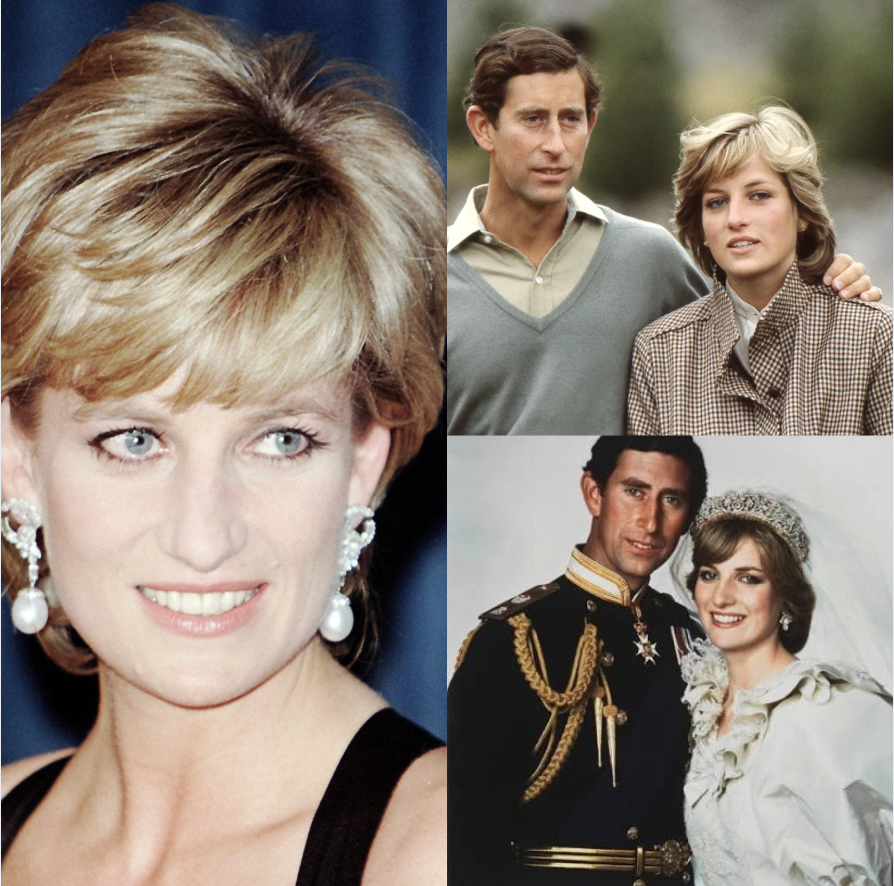
In the chaotic days following the tragic car crash in Paris on August 31, 1997, that claimed the life of Princess Diana at just 36 years old, one of the most poignant decisions in modern royal history unfolded behind closed doors. What the world saw was a state funeral of unprecedented scale at Westminster Abbey, watched by an estimated 2.5 billion people. But few knew that Diana’s final resting place had been dramatically altered at the eleventh hour. Her brother, Charles Spencer, 9th Earl Spencer, made a call that would rewrite her legacy’s geography forever — driven, he claimed, by one overwhelming concern: protecting her memory and her family from an uncontrollable public frenzy.
The original burial plan was completely different. Diana was set to be interred in the historic Spencer family vault at St. Mary’s Church in the nearby village of Great Brington, Northamptonshire — a traditional resting place for generations of her aristocratic ancestors. But in the raw grief and logistical nightmare immediately after her death, Earl Spencer intervened. The decision stunned insiders and altered the course of how the world would remember and visit the People’s Princess.
The Days of Shock and Swift Decisions
Diana’s death sent Britain and the globe into mourning. Flowers piled up by the thousands outside Kensington Palace. The Royal Family faced intense public pressure over their initial response. Amid this turmoil, funeral arrangements moved at breakneck speed.
According to multiple accounts, including statements from Earl Spencer himself and contemporary reports, the family vault at Great Brington was the default choice. It was private, steeped in Spencer heritage, and aligned with tradition. Yet, as the scale of public adoration became clear — with millions expected to descend on the small village — concerns mounted rapidly.
Earl Spencer later explained that he feared the tiny church and surrounding area would be overwhelmed. Security risks were enormous. The safety of visitors, local residents, and Diana’s own sons, Princes William and Harry (then just 15 and 12), weighed heavily. “There was such an outpouring,” he reflected in later interviews and writings. The decision was made to bury her instead on the Althorp estate, the Spencer family’s ancestral home since 1508, specifically on a secluded, tree-covered island in the middle of the ornamental Round Oval lake.
The island, often called “The Oval,” offered natural barriers — water surrounding it acted as a buffer against unwanted intrusions. Earl Spencer described it as a place of beauty and tranquillity where Diana could rest peacefully, away from the “interventions of the insane and ghoulish.” The ground was specially consecrated by the Bishop of Peterborough before the private burial on September 6, 1997, attended only by her immediate family, sons, mother, siblings, and a few close confidants.
Overwhelming Concern: Public Safety and Privacy
The “real reason,” as insiders and the Earl articulated, boiled down to one overriding fear: an uncontrollable deluge of mourners that could turn a sacred site into chaos. Great Brington, a quiet village, simply could not cope with the anticipated crowds. Roads were narrow, infrastructure limited. The risk of accidents, trespassing, and disruption to daily life was deemed too high.
By choosing Althorp, the family gained control. The estate allowed for proper maintenance of the grave. It provided a space where William and Harry could visit privately without the glare of cameras or crowds. A nearby temple on the grounds serves as a public memorial, allowing fans to pay respects at a distance while the actual grave remains inaccessible to the public — a balance between remembrance and protection.
Critics, however, saw deeper motivations. Some speculated family tensions played a role. Diana had reportedly felt estranged from parts of her family at times, and debates arose about reclaiming her as a “Spencer.” Former butler Paul Burrell later claimed a symbolic moment at the burial where the Royal Standard was replaced with the Spencer family flag, with the Earl allegedly declaring, “She is a Spencer now.” Earl Spencer strongly denied any disrespect, stating the change was pre-agreed and dignified.
Regardless of interpretations, the move underscored the immense pressure on the Spencer family. They were navigating not only personal grief but the weight of Diana’s global icon status.
A Legacy Set in Water and Stone
Today, Diana lies on that peaceful island, surrounded by trees and calm waters. The site has undergone renovations over the years, including a reported multimillion-dollar revamp to address maintenance issues and public interest. Althorp opens its grounds seasonally for visitors, who can view the memorial but not approach the grave itself.
For William and Harry, the location has provided a private sanctuary. Both princes have spoken movingly about their mother, with Harry particularly reflecting on the loss in interviews and his memoir. The seclusion has arguably shielded them from some intrusions, though the public’s fascination endures.
The change also fueled conspiracy theories and endless speculation — part of the enduring Diana mystique. Some questioned if she truly rests there, while others debated whether a church burial would have been more fitting. Yet Earl Spencer has consistently maintained it was an act of love and responsibility.
The Human Toll and Enduring Mystery
Diana’s death and burial decisions highlighted the collision between private family matters and public obsession. The “overwhelming concern” that prompted the last-minute shift was, at its core, a desperate attempt to reclaim some control in an uncontrollable situation.
In the years since, Althorp has become a place of pilgrimage for many, even as the grave itself guards its solitude. Diana’s sons have grown into their roles — William as future king, Harry forging his own path. Both carry her memory, often crediting her compassion and humanitarian spirit for shaping them.
The last-moment change to her resting place remains one of the most poignant footnotes to a life cut short. It was a brother’s protective instinct, a family’s bid for peace amid chaos, and a final act that ensured the People’s Princess could rest away from the spotlight she both craved and endured.
As visitors continue to flock to the temple at Althorp and leave tributes, the decision made in those stunned days after Paris continues to shape how we honor her — not in a crowded churchyard, but in serene isolation, where the water whispers and history holds its breath.
The full story behind that choice reveals as much about Diana’s extraordinary impact as it does about the burdens of fame, family duty, and saying goodbye under the world’s watchful eye.