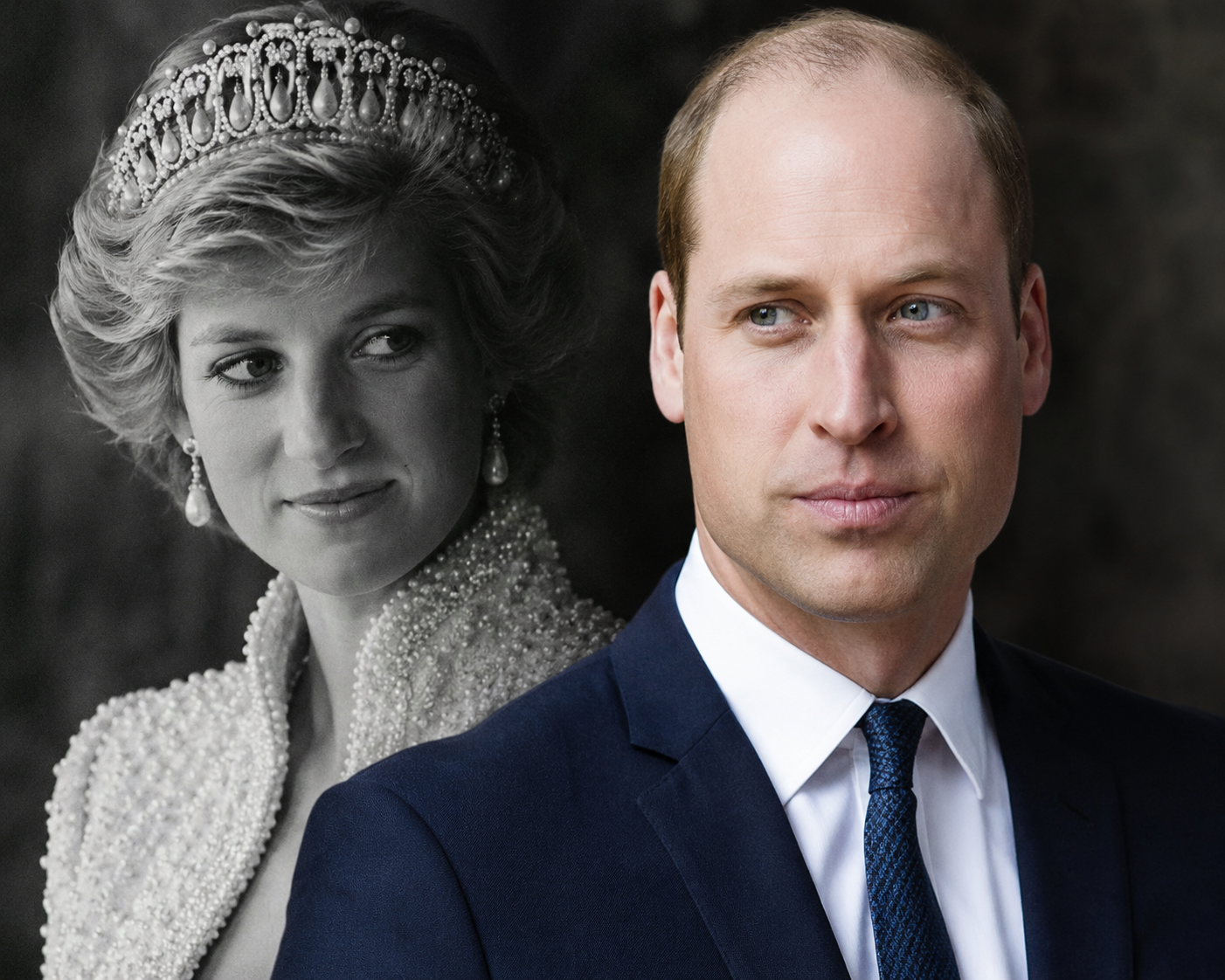
In the private world of Kensington Palace, far from the glare of cameras and official royal duties, there were moments that never made it into official records — moments of vulnerability, emotion, and family bonds tested under extraordinary pressure. One of the most widely discussed of these private exchanges involves a young Prince William and a promise he reportedly made to his mother, Princess Diana, during one of the most painful transitions of her life.
It is a story often repeated, rarely verified in official documentation, yet powerful enough to endure for decades: a child’s vow to restore what his mother had lost — a vow that history itself would eventually render impossible.
A Turning Point That Changed Diana’s Identity
In August 1996, Princess Diana’s divorce from then-Prince Charles was finalized, formally ending one of the most closely watched marriages in the world. With that legal separation came a series of constitutional and symbolic changes that deeply affected her public identity.
One of the most emotionally significant changes was the loss of her HRH style — “Her Royal Highness.” From that point forward, she was officially known as Diana, Princess of Wales, rather than HRH Princess of Wales. While the adjustment may have appeared procedural on paper, those close to her described it as deeply personal and painful.
Beyond titles and protocol, it symbolized a final severing from the institution she had married into as a young woman. Even more striking was the shift in etiquette: Diana was no longer accorded the same royal precedence, a change that reportedly left her feeling isolated at a time when she was already navigating immense emotional strain.
For someone who had spent much of her adult life within the strict structure of the monarchy, the transition was not simply administrative — it was identity-altering.
A Private Moment at Kensington Palace
It was within this emotional backdrop that the now-famous story is said to have taken place. According to accounts shared by individuals close to the royal household — most notably former royal staff member Paul Burrell — a private exchange unfolded between Diana and her eldest son, Prince William, then just 14 years old.
Witnessing his mother’s distress over the changes in her status, William reportedly attempted to comfort her in the simplest way a teenager could — through reassurance rooted in love and loyalty.
As the story goes, he told her:
“Don’t worry, Mummy, I will give it back to you one day when I am king.”
The words, spoken in innocence, carried emotional weight far beyond what a child could fully understand. In that moment, they were not about constitutional realities or royal protocol. They were about a son trying to soothe his mother’s pain.
For Diana, the sentiment reportedly struck deeply. Friends and staff who later reflected on her reaction suggested she was moved by the gesture — not because of any literal expectation that such a change could be made, but because of what it represented: unconditional love, protection, and emotional solidarity from her son during a period of profound vulnerability.
The Emotional Power of a Child’s Promise
Childhood promises often exist in a world unburdened by practicality. They are shaped by emotion rather than feasibility, sincerity rather than structure. In William’s case, the promise reflected a desire to restore dignity to his mother at a time when she felt diminished by circumstance.
But within the framework of monarchy, titles such as HRH are not personal possessions that can simply be returned. They are governed by sovereign authority, tradition, and institutional precedent. Even for a future king, the decision to alter or reinstate such styles would be complex, constrained by constitutional norms and public expectation.
This disconnect between emotional intention and institutional reality is part of what gives the story its lasting poignancy. It is not simply about royalty — it is about the universal gap between what we wish we could do for the people we love and what the world actually allows.
A Tragedy That Altered Everything
Less than a year after the divorce was finalized, Princess Diana died in a car crash in Paris on August 31, 1997. She was 36 years old. William was 15.
Her death transformed an already emotional story into something far more haunting. A private moment that once symbolized comfort between mother and son became, in retrospect, a fragment of unfinished grief — a memory frozen in time, never to evolve into reality.
For William, the promise he made as a teenager could never be tested, fulfilled, or revisited in the way he might once have imagined. The future in which he would become king would unfold in a world without his mother in it.
How the Story Endures
Over the years, the account has been retold in books, documentaries, and media discussions about the royal family. However, it is important to note that much of its detail originates from secondary recollections rather than official transcripts or verified recordings.
Still, its persistence in public memory speaks less to its documentary certainty and more to its emotional resonance. It captures something deeply human within one of the world’s most formal institutions: a young boy trying to comfort his mother with the only promise he could think of — absolute devotion expressed through future power.
It also reflects Diana’s unique place in modern royal history. She was not only a princess but also a mother whose relationship with her children often appeared more open, emotionally expressive, and relatable than traditional royal norms might have allowed.
A Symbol Rather Than a Plan
Today, the story is often interpreted less as a literal vow and more as a symbolic moment. It represents the bond between William and Diana, shaped under extraordinary public pressure and private emotional strain.
Whether or not the exact words were spoken exactly as recounted, the essence of the story remains powerful: a child’s attempt to protect his mother, and a mother’s comfort in her child’s love during one of the most difficult chapters of her life.
It also serves as a reminder of how personal emotions intersect with public roles in ways that cannot always be reconciled. Even within a monarchy defined by tradition and structure, the most enduring moments are often the simplest — a conversation, a reassurance, a promise made in love.
The Legacy of an Unfinished Promise
As Prince William’s life has progressed into adulthood, marriage, fatherhood, and future kingly responsibilities, the childhood promise remains a poignant footnote in his early years. Not as a political commitment, but as a memory tied to grief, innocence, and the loss of a parent who remains one of the most beloved figures in modern royal history.
Some promises are meant to be kept. Others exist only to reveal the depth of feeling behind them.
And in this case, the most heartbreaking part is not that the promise was broken — but that the world itself changed so completely that there was never a chance for it to be kept at all.