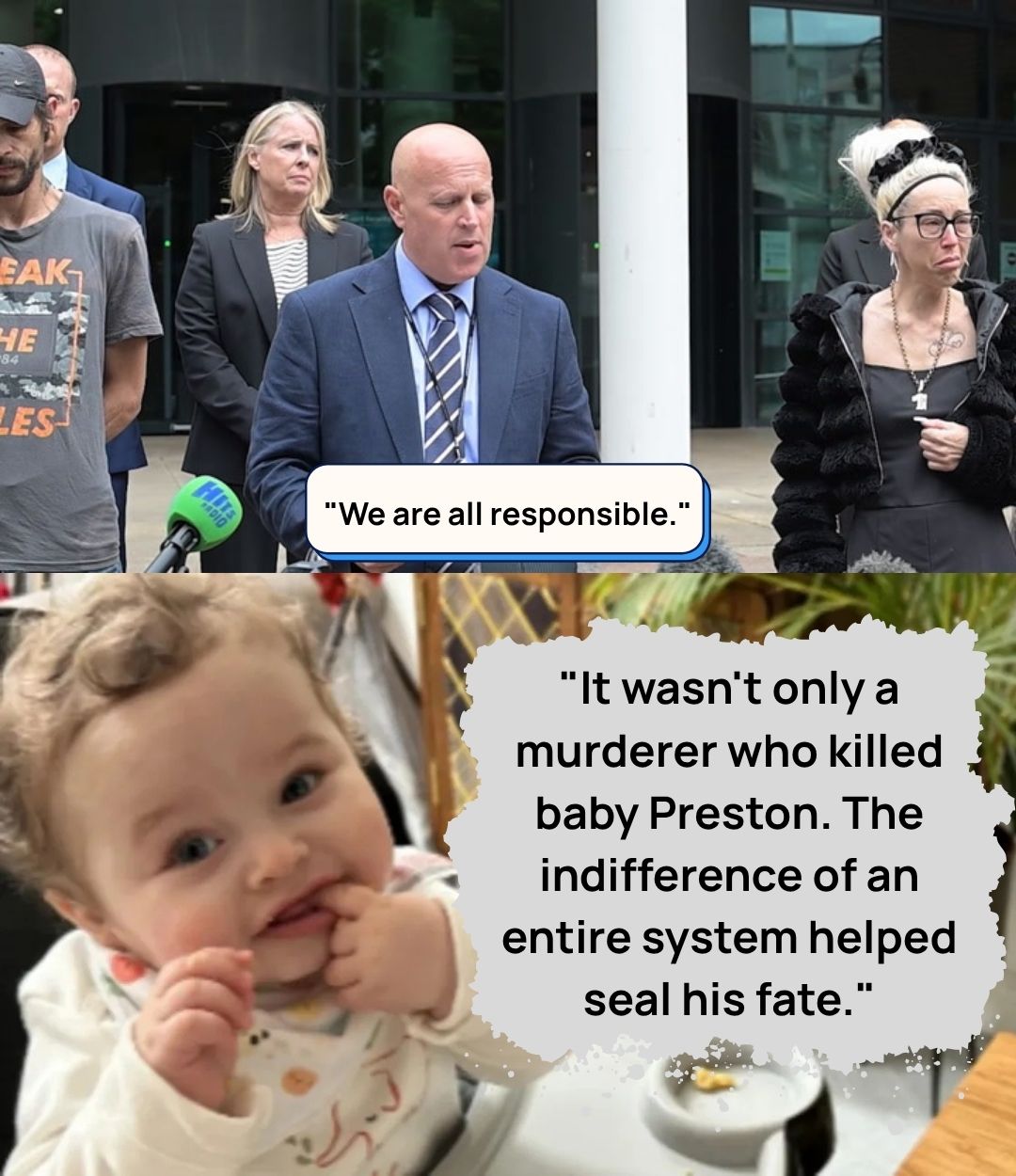
Justice has finally been delivered in the heartbreaking case of baby Preston Davey.
Former teacher Jamie Varley has been sentenced to spend the rest of his life behind bars after being convicted of murdering 13-month-old Preston, a child he and his partner were in the process of adopting. The verdict brought relief to many who followed the case and listened in horror as details emerged about the abuse Preston suffered during the final months of his life.
For Preston’s family, investigators, and supporters, the sentence represents accountability for one of the most disturbing child abuse cases heard in a British courtroom in recent years.
Yet even as the criminal proceedings come to a close, another conversation is gaining momentum.
How did this happen?
Not simply how one individual committed such terrible crimes, but how a vulnerable child came into contact with a situation that ultimately proved fatal despite repeated interactions with professionals, institutions, and safeguarding systems designed to protect children exactly like him.
Those questions are now becoming impossible to ignore.
A Child in a System Designed to Protect Him
When Preston Davey was placed with Jamie Varley and John McGowan-Fazakerley, the placement did not happen by accident.
The couple had gone through an approval process.
Assessments had been conducted.
References had been gathered.
Professionals had evaluated whether they could provide a safe and stable environment for a vulnerable child.
Ultimately, the adoption system determined that they were suitable caregivers.
That decision would later become the subject of intense public scrutiny.
In the wake of the verdict, many observers have questioned whether warning signs were missed during the approval process or whether some risks simply could not have been anticipated.
While no evidence has emerged suggesting that adoption officials knowingly placed Preston in danger, the outcome has nevertheless raised difficult questions about how prospective adopters are assessed and monitored.
Those questions are not directed at any single individual.
Rather, they focus on whether existing systems are sufficiently equipped to identify people who may pose a risk to children.
Multiple Opportunities for Intervention
One of the most troubling aspects of the case is the number of interactions Preston had with professionals before his death.
According to evidence presented during the trial, Preston was taken to hospital on multiple occasions while living with the couple.
Medical staff examined him.
Healthcare professionals treated him.
Records were created.
Questions were asked.
In addition, social workers and other safeguarding professionals remained involved throughout portions of the placement.
The system was not absent.
The system was present.
Yet despite that presence, Preston continued to suffer injuries.
That reality has led many people to ask whether opportunities existed to intervene earlier.
Experts caution that child protection cases are often far more complex than they appear in hindsight.
Professionals must balance competing information, evaluate explanations provided by caregivers, and make decisions based on evidence available at the time.
Even so, serious case reviews following child deaths frequently examine whether patterns that later appear obvious were less visible during the events themselves.
Preston’s case is likely to prompt similar reflection.
The Challenge of Identifying Abuse
Child protection specialists often point out that perpetrators can be skilled at presenting themselves as caring, responsible, and trustworthy.
Many abuse cases involve individuals who appear entirely capable of providing safe care.
This reality creates enormous challenges for safeguarding systems.
Background checks can identify known concerns.
Interviews can assess suitability.
References can provide insight.
But predicting future behavior remains difficult.
In Preston’s case, prosecutors argued that abuse began shortly after he entered the household.
If true, that would mean the risk emerged rapidly after placement.
The challenge for authorities now is understanding whether there were indicators that could have been identified sooner.
Understanding those factors may prove essential in improving future safeguards.
Public Confidence in Adoption
The case has also generated concern about public confidence in adoption services.
Adoption remains one of the most important ways vulnerable children find permanent homes.
Thousands of adoptive families provide loving, stable environments that transform children’s lives.
Experts warn against allowing one horrific case to overshadow the overwhelming majority of successful adoptions.
At the same time, transparency is critical.
When tragedies occur, the public expects answers.
Understanding what happened—and whether lessons can be learned—helps maintain confidence in systems responsible for protecting children.
For that reason, many observers believe a thorough review of the circumstances surrounding Preston’s placement is both necessary and appropriate.
The Role of Safeguarding Reviews
In the United Kingdom, serious child protection incidents often lead to detailed reviews designed to identify lessons and recommend improvements.
These reviews examine decision-making processes, communication between agencies, and opportunities for intervention.
Their purpose is not simply to assign blame.
Their purpose is to prevent future tragedies.
Cases such as those involving Victoria Climbié, Peter Connelly, Arthur Labinjo-Hughes, and others have led to significant reforms in child protection policies.
Many experts expect Preston Davey’s case to receive similar scrutiny.
Any review would likely consider the actions of multiple agencies, including health services, social care providers, and adoption professionals.
It may also explore broader questions about how authorities monitor placements and respond to concerns.
A Difficult Reality
There is an uncomfortable truth at the center of every child protection tragedy.
Systems can reduce risk.
They cannot eliminate it entirely.
No safeguarding framework can guarantee perfect outcomes.
No assessment process can predict every future action.
Yet society still expects those systems to function effectively enough to protect vulnerable children whenever possible.
That expectation is reasonable.
Children depend on adults to keep them safe.
When a child dies after repeated contact with professionals, questions inevitably follow.
Those questions are not an attack on individual workers who may have acted in good faith.
They are part of the process of understanding whether systems can be strengthened.
Justice and Accountability
The guilty verdicts delivered in Preston’s case represent legal accountability for those convicted of crimes against him.
For many people, that accountability was essential.
But accountability can exist on multiple levels.
Criminal accountability determines responsibility for unlawful acts.
Institutional accountability asks whether organizations fulfilled their responsibilities appropriately.
The two are not the same.
Recognizing that distinction is important.
No review can change what happened to Preston.
No investigation can undo the pain experienced by those who loved him.
But understanding failures—if failures occurred—may help protect other children in the future.
Remembering Preston
Amid discussions about systems, policies, and procedures, it is important not to lose sight of the child at the center of the case.
Preston Davey was not a headline.
He was a little boy.
A child who deserved safety, care, and love.
The verdict ensures that those convicted of harming him have been held responsible under the law.
Yet the legacy of his case may extend beyond the courtroom.
It may influence future discussions about adoption, safeguarding, professional oversight, and child protection.
The hardest questions often emerge after a trial ends.
In Preston Davey’s case, many believe those questions are only beginning.
Justice has been delivered.
Now comes the equally important task of understanding how such a tragedy occurred—and whether anything can be done to ensure another child does not suffer the same fate.