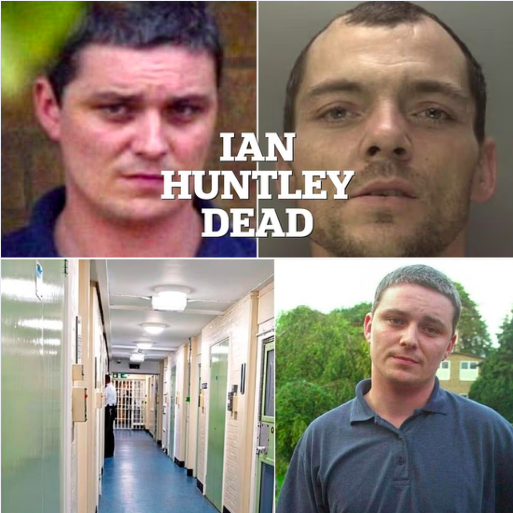
For more than two decades, the name Ian Huntley has remained etched into the collective memory of the United Kingdom. His crimes shocked a nation, shattered families, and triggered one of the most extensive criminal investigations in British history. But now, in a dramatic and disturbing final chapter, the man once known as the “Soham killer” has died following a brutal prison attack — and the circumstances surrounding his final days are sending shockwaves through the public once again.
What began as an ordinary day inside one of Britain’s most secure prisons quickly spiraled into a violent incident that would ultimately end Huntley’s life. And as investigators piece together the details of that fatal assault, the story behind his painful death is raising troubling questions about prison security, inmate violence, and the lingering impact of one of Britain’s most infamous crimes.
The Crime That Shocked Britain
Long before the events that led to his death, Ian Huntley had already become one of the most notorious criminals in British history.
In August 2002, two ten-year-old girls — Holly Wells and Jessica Chapman — disappeared after leaving a family barbecue in the quiet town of Soham, Cambridgeshire. What began as a desperate search quickly turned into a nationwide investigation that captivated the country.
For 13 days, police officers, volunteers, and worried residents searched fields, roads, and nearby villages for any sign of the missing children. More than 400 officers were assigned to the case, making it one of the largest police operations in British history.
The tragic truth soon emerged.
The girls had been lured into the home of Ian Huntley, a school caretaker who had been living in the community and working near the girls’ school. Investigators later discovered evidence linking him directly to the crime, including burned fragments of the clothing the girls had been wearing.
In 2003, Huntley was convicted of the murders and sentenced to life in prison with a minimum term of 40 years.
The case devastated the nation and led to sweeping reforms in the UK’s background-checking system for people working with children.
But while Huntley disappeared behind prison walls, the anger and grief surrounding his crimes never truly faded.
A Life Behind Bars
Huntley spent more than two decades incarcerated in the British prison system, eventually being housed at HM Prison Frankland, one of the country’s most secure facilities.
Category A prisons like Frankland hold inmates considered among the most dangerous in the UK. The prison houses several notorious criminals and is designed with the highest levels of security.
Yet even inside such a controlled environment, Huntley remained a constant target.
Over the years, he survived several violent attacks from other inmates. In 2010, another prisoner slashed his throat in an assault that nearly killed him. In earlier incidents, he was reportedly scalded with hot water and threatened repeatedly by other prisoners.
These attacks reflected the intense hostility many inmates felt toward him because of the nature of his crimes.
Despite strict protection measures, prison authorities knew Huntley would remain at risk for as long as he remained behind bars.
The Violent Attack That Changed Everything
The final incident occurred on February 26, 2026.
According to investigators, Huntley was working in a prison workshop inside HMP Frankland when another inmate allegedly launched a sudden and brutal attack.
The attacker reportedly used a metal weapon, striking Huntley repeatedly and causing catastrophic head injuries. Witnesses described the scene as chaotic, with prison staff rushing to intervene as the wounded inmate collapsed.
Emergency services were quickly called, and Huntley was rushed to Royal Victoria Infirmary in Newcastle, where doctors fought to save his life.
The injuries were severe.
Doctors placed him in a medically induced coma as they attempted to stabilize his condition. But despite intensive treatment, the damage to his brain proved devastating.
A Fight for Life
For days, Huntley remained on life support in hospital.
Medical teams monitored his condition while investigators began piecing together what had happened inside the prison workshop.
Reports indicated that Huntley had suffered massive head trauma that left him in a vegetative state. Doctors warned that the chances of recovery were extremely slim.
Eventually, after consultations with medical staff and his family, the difficult decision was made to withdraw life support.
On March 7, 2026, Ian Huntley died at the age of 52.
The death marked the end of a life defined by one of the most notorious crimes in British history.
The Suspected Attacker
Authorities soon identified the suspected attacker as Anthony Russell, another inmate being held at the same prison.
Russell himself had been convicted of multiple violent crimes, including murder and rape.
Following the attack, he appeared in court and is now facing charges related to Huntley’s death.
Investigators are continuing to examine the circumstances surrounding the assault, including how the weapon was obtained and whether security procedures were breached.
The incident has raised difficult questions about safety inside maximum-security prisons and whether staff could have prevented the attack.
Reactions Across the Country
News of Huntley’s death triggered strong reactions across the United Kingdom.
For many people, the memory of the Soham murders remains deeply painful. The case had a profound emotional impact on the country, and the names of Holly Wells and Jessica Chapman are still remembered with sadness.
Officials from the Ministry of Justice acknowledged that the murders remain one of the most devastating crimes in modern British history and reiterated their sympathy for the victims’ families.
Some members of the public expressed relief that Huntley could never harm anyone again.
Others reflected on the broader tragedy of the case — not only the crimes themselves but also the systemic failures that allowed Huntley to work near children despite previous allegations of misconduct.
The Legacy of the Soham Case
The Soham murders changed the United Kingdom in significant ways.
One of the most important outcomes was the creation of improved background-checking systems for people working with children. The case exposed major gaps in how information about previous allegations and complaints was shared between police forces and employers.
Today, safeguarding procedures across schools and youth organizations are far stricter as a result.
The tragedy also sparked nationwide conversations about child protection, community vigilance, and the responsibilities of institutions.
More than twenty years later, the names of Holly Wells and Jessica Chapman remain symbols of those reforms.
A Dark Final Chapter
While Huntley’s death closes one chapter in this long and painful story, the investigation into the prison attack is still ongoing.
Authorities are reviewing security procedures inside HMP Frankland to determine exactly how the assault happened and whether additional safeguards are necessary.
For the families of the victims, however, the focus has always remained on the memory of the two young girls whose lives were stolen in 2002.
Their story — and the impact it had on the nation — continues to shape the way Britain thinks about justice, safety, and accountability.
The End of a Notorious Life
In the end, the life of Ian Huntley ended in the same place where he had spent more than two decades: behind prison walls.
His death following a violent assault has reignited public attention on a case that once dominated headlines across the world.
Yet for many people, the true legacy of the story is not the fate of the man who committed the crime — but the lasting memory of the children whose lives were tragically cut short.
And as the investigation into his final moments continues, one thing remains certain: the shadow of the Soham murders will never fully disappear from Britain’s history.