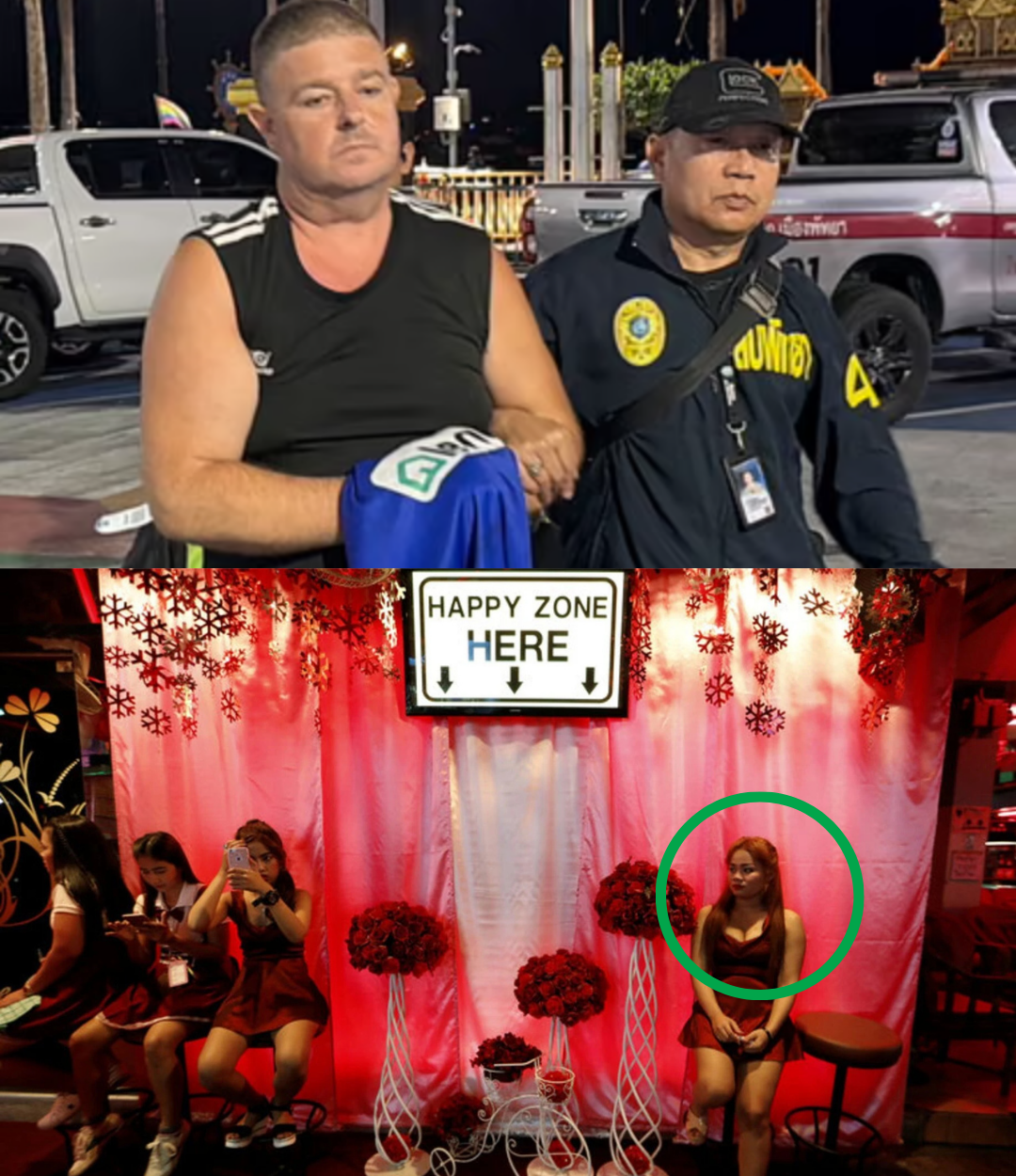
The true horror of a violent crime rarely resides in the physical act itself. Instead, it lives in the calculated premeditation that precedes it, and the freezing, methodical cleanup that follows. In the weeks since 17-year-old Thunchanok “Cake” Donhomla’s body was unzipped from a heavy travel suitcase near the Jomtien Beach railway tracks, Pattaya’s tourist sector has tried desperately to return to business as usual. The neon signs still flash along the walking streets; the bass still thumps from the open-air bars.
But inside Room 704 of the luxury condominium complex where Thunchanok spent her final hours with 45-year-old Australian national Simon Peter Carman, the silence remains absolute.
As Thai forensic scientists, digital profilers, and criminal psychologists slowly piece together the physical and psychological architecture of that fateful night, the case has moved beyond a straightforward homicide investigation. It has become a chilling masterclass in forensic reconstruction, revealing a terrifying glimpse into the mind of a predator who believed that the transient nature of Pattaya would allow him to commit the perfect crime.
The Geography of a Controlled Kill Zone
To understand how this tragedy unfolded without a single neighbor hearing a cry for help, forensics teams had to map the physical environment of Room 704. Luxury condominiums in Jomtien are built for privacy, featuring heavy concrete walls, double-paned sliding glass doors to block out the coastal wind, and deep acoustic dampening. It was the perfect, insulated container.
+-----------------------------------------------------------------------+
|                 FORENSIC BLUEPRINT: THE SECLUSION METHOD              |
+-----------------------------------------------------------------------+
| PHYSICAL BARRIERS                  | PSYCHOLOGICAL CONTROL            |
| • Soundproofed concrete walls      | • Exploitation of age gap (17 vs 45) |
| • Double-paned glass balcony doors | • Complete geographic isolation  |
| • Asphyxiation (No blood spill)    | • Stripped environment (No clues) |
| • Heavy-duty travel luggage        | • Erasure of personal belongings |
+-----------------------------------------------------------------------+
When investigators first stepped across the threshold after Carman’s arrest, the immediate impression was one of unsettling sterility. There were no signs of a chaotic struggle. No overturned furniture, no broken glass, and no blood splatters on the pristine white tile floors.
The physical evidence quickly revealed why. Forensic pathologists from the Institute of Forensic Medicine in Bangkok confirmed that Thunchanok’s cause of death was acute asphyxiation. The killer did not use a weapon that would puncture skin or leave a dynamic trail of DNA. Instead, the compression of her airway was achieved silently, likely using the very pillows from the bed. By choosing a bloodless method of execution, the perpetrator ensured that no biological evidence would seep into the floorboards or alert the building’s housekeeping staff the following morning.
The Panic of the “Perfect” Timeline
Every serial or organized criminal operates on a timeline, but the most fascinating aspect of this case is how a single, unexpected variable shattered the suspect’s composure: the relentless intuition of the victim’s best friend.
Criminal profilers note that when Carman returned to his room after the murder, he believed he had days, if not weeks, to plan his exit strategy. In a city where young women frequently drift between provinces and change phone numbers, a 24-hour absence rarely triggers a police response. Carman had already stripped the mattress, laundered the sheets to destroy microscopic fibers, and packed Thunchanok’s entire life—her shoes, her clothes, her makeup—into the suitcase alongside her. He was systematically erasing her existence from the room.
  [ Killer's Calculated Plan ] ──► (Silent Kill -> Clean Room -> Fly Home)
                │
                ▼ (The Interruption)
  [ Best Friend Knocks on Door ] ──► (Timeline Fractures Instantly)
                │
                ▼
  [ Panic Setting In ] ──► (Forced to Move Body Ahead of Schedule)
                │
                ▼
  [ Sloppy Disposal & Flight ] ──► (Caught at Suvarnabhumi Airport)
But the sudden, loud pounding on his door at 5:30 PM by Thunchanok’s panicked friend fractured his timeline completely. When Carman opened that door, acting casual while wrapped in a towel, his mind was forced into overdrive. He realized the clock was ticking. The police would be involved within hours.
This psychological pressure cooker is exactly why the disposal of the body became so remarkably sloppy. Instead of waiting for the dead of night or renting a private vehicle, a visibly strained Carman was forced to drag the massive suitcase down the elevator at 9:00 PM—right past security cameras—and dangerously balance it on the back of a small rental motorbike. He couldn’t travel far; the weight made the bike unstable. He was forced to dump the cargo at the nearest dark, overgrown patch of land he could find: the Jomtien railway tracks.
The Digital Anatomy of an Escape
While the physical evidence locked Carman to the room, it was the digital forensics that closed the trap. Following the disposal of the suitcase, Carman’s phone records show a frantic flurry of activity. He wasn’t looking for a place to hide in Thailand; he was checking flight availabilities.
               [ Digital Footprint Timeline ]
                              │
         ┌────────────────────┴────────────────────┐
         ▼                                         ▼
[ 10:15 PM: Booking ]                    [ 02:00 AM: Transit ]
• One-way ticket to Australia             • App-based taxi hailed to Bangkok
• Premium price paid for fast departure  • Phone switched to roaming/airplane
Detectives tracking his digital footprint discovered that within forty-five minutes of discarding the luggage, Carman had purchased a one-way, premium-fare ticket back to Australia departing from Suvarnabhumi Airport the following morning. He booked an app-based taxi to drive him the two hours from Pattaya to Bangkok in the middle of the night, abandoning his rented apartment and most of his personal belongings.
This frantic flight pattern is what criminal courts refer to as “consciousness of guilt.” An innocent man does not abruptly abandon his long-term vacation rental in the middle of the night, leave his clothes behind, and pay thousands of dollars for an immediate flight home hours after a girl vanishes from his room.
The Silence That Follows
As the Royal Thai Police prepare the final evidentiary dossier for the prosecutor’s office, the broader implications of the Thunchanok Donhomla case continue to ripple outward. The forensic reconstruction proved exactly how she died, but it cannot fix the societal fractures that allowed her to be targeted in the first place.
Room 704 has since been unsealed, but the real estate agents say it will likely remain unrented for years. The local residents walk past the railway tracks with a hushed reverence, leaving small tokens of flowers and traditional Thai spirit offerings where the black suitcase once sat.
The predator’s calculation was nearly flawless: a soundproof room, a bloodless method, a transient victim, and an international border just a few hours away. He had thought of every single variable except one—the unbreakable bond of a childhood friend who refused to let a loved one disappear into the quiet neon night without a fight.
Disclaimer: This is a true crime discussion blog. Images are from public records. We are not law enforcement.