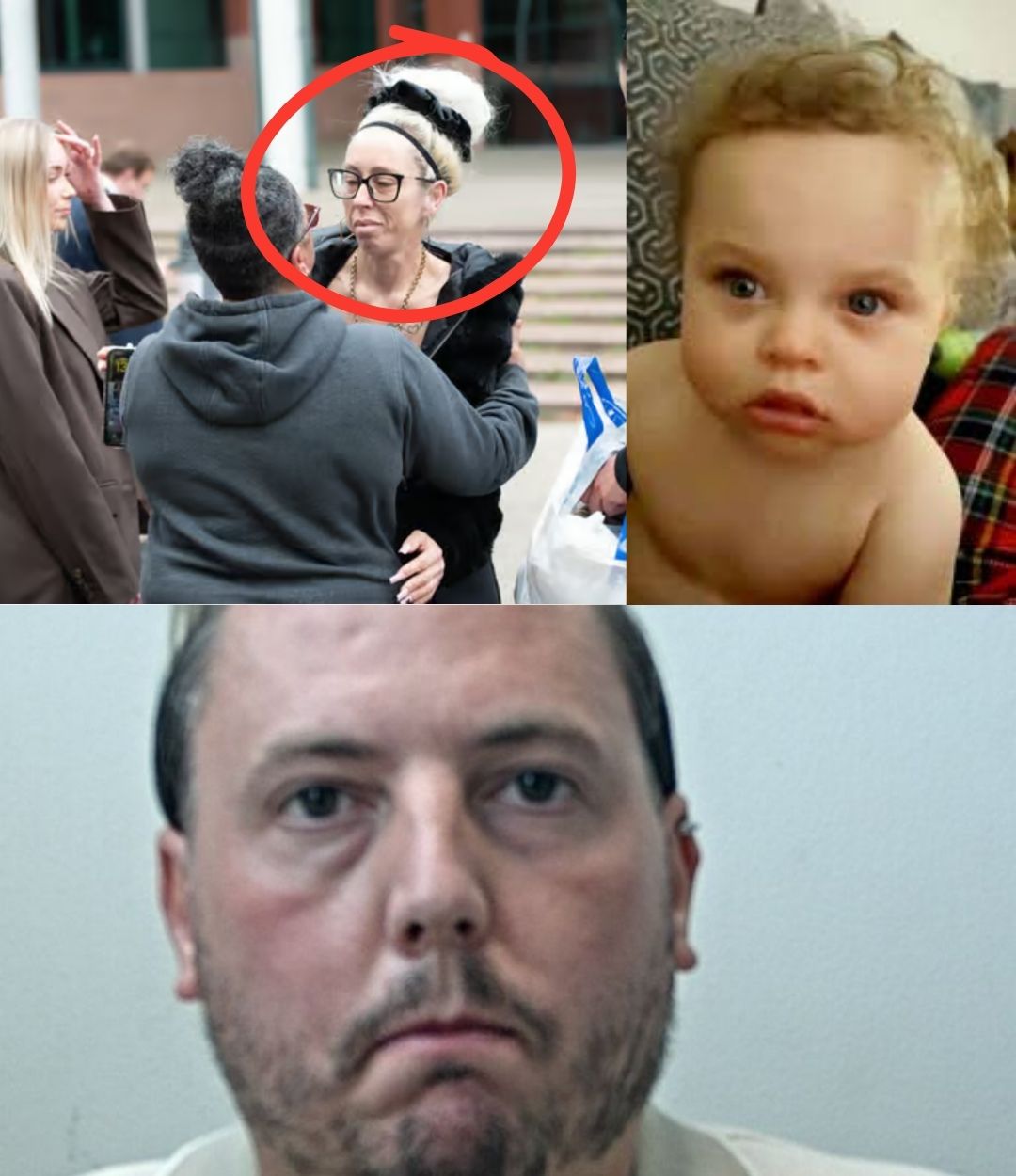
The grieving birth mother of murdered toddler Preston Davey has revealed that the first thing she did after leaving prison was travel to the home where her son spent the final months of his short life.
In an emotional interview following the sentencing of Preston’s killers, Sarah Davey described the overwhelming need she felt to see the place where her baby had lived before his tragic death—a journey she says was driven by love, heartbreak, and a desperate desire to feel close to her son.
Speaking outside Preston Crown Court after weeks of harrowing testimony, Sarah reflected on the devastating reality that Preston’s life ended at the hands of the very people entrusted with caring for him.
“I felt compelled to go there,” she explained, describing her trip from Oldham to the village of Staining in Blackpool shortly after her release from prison.
For Sarah, the visit was about understanding the final chapter of Preston’s life.
The emotional revelation came after one of the most disturbing child abuse and murder trials heard in Britain in recent years reached its conclusion.
Former South Shore Academy teacher Jamie Varley, 37, was sentenced to a whole-life order after being convicted of murdering 13-month-old Preston. His former partner, financial salesman John McGowan-Fazakerley, received a 25-year prison sentence.
The pair had been in the process of adopting Preston when he died at Blackpool Victoria Hospital on July 27, 2023.
Throughout the eight-week trial, jurors heard evidence detailing months of abuse, neglect, and cruelty inflicted upon the toddler after he was placed in the couple’s care.
The evidence presented shocked even experienced legal professionals.
Preston had lived with the couple for less than four months.
In that short period, he suffered more than 40 traumatic injuries.
Medical experts identified over 30 bruises across his small body that were determined to be non-accidental.
The injuries painted a horrifying picture of sustained abuse.
As the verdicts were delivered and sentences imposed, Sarah sat in court alongside her mother, Debbie Davey.
Both women broke down in tears as Mr Justice Turner delivered the punishments that would ensure Varley spends the rest of his life behind bars.
Reflecting on the outcome, Sarah said she felt a sense of relief.
“I am completely made up with the sentence,” she said.
“It was everything we were hoping for.”
For Sarah and her family, the whole-life order represented recognition of the extraordinary cruelty inflicted upon Preston.
Yet despite their relief, there remained frustration regarding the sentence handed to McGowan-Fazakerley.
“We would have liked to have seen McGowan-Fazakerley get the same time because, in our eyes, he is equally as guilty,” she said.
The sentencing marked the end of a trial that exposed shocking failures and raised difficult questions about how such abuse could continue unnoticed.
During Preston’s time with the couple, he was taken to hospital on three separate occasions.
One visit involved a fractured elbow.
Medical professionals treated him.
Social workers visited the home regularly.
Authorities maintained oversight of the placement.
Yet despite repeated opportunities for intervention, Preston remained in an environment where prosecutors argued he was being systematically abused.
One of the most troubling aspects of the case was the evidence suggesting concerns existed but were never fully acted upon.
Jurors heard that Varley had expressed negative thoughts about the child.
Messages presented during the trial revealed frustration and hostility toward Preston.
The court also heard evidence regarding repeated injuries and behavioral signs consistent with trauma.
Yet no action was taken that ultimately removed him from danger.
Those failures continue to haunt Preston’s family.
Questions remain about how a vulnerable child could sustain so many injuries while remaining under the supervision of multiple agencies.
For many observers, the case has become a symbol of the devastating consequences that can occur when warning signs are missed or underestimated.
Throughout the proceedings, Sarah was forced to listen as prosecutors detailed the abuse her son endured.
Witness testimony, medical evidence, and expert opinions painted a heartbreaking picture of Preston’s final months.
Friends of the family described the experience as almost unbearable.
Despite the emotional toll, Sarah attended court consistently, determined to hear the truth about what happened to her son.
Those close to her say the trial reopened wounds that may never fully heal.
Yet it also provided answers.
For nearly two years, questions surrounding Preston’s death had lingered.
The verdicts finally established legal responsibility for what happened.
For detectives who investigated the case, the outcome brought a measure of justice.
Investigators previously described Varley as “pure evil,” a characterization reflecting the severity of the crimes uncovered during the investigation.
The evidence recovered by police shocked even seasoned officers.
The trial exposed a pattern of abuse that escalated over time before ultimately ending in tragedy.
For Sarah, however, no sentence can restore what was lost.
She continues to remember Preston not as a victim but as a joyful little boy.
A child whose smile, she says, could light up an entire room.
Family members have spoken repeatedly about his happy nature and infectious personality.
Those memories now stand in painful contrast to the evidence presented during the trial.
As the legal process concludes, attention is increasingly turning toward lessons that can be learned from the case.
Child protection experts have called for reviews into how concerns were identified, assessed, and addressed throughout Preston’s placement.
Advocates argue that understanding what went wrong is essential to preventing similar tragedies in the future.
The case has reignited conversations about safeguarding vulnerable children and ensuring warning signs receive appropriate attention.
For Sarah and her family, those discussions matter.
If changes emerge that help protect another child, they believe Preston’s legacy may contribute to preventing future suffering.
Still, the focus remains on remembering the boy at the center of the tragedy.
A 13-month-old child whose life ended far too soon.
A little boy who should have been safe.
A little boy who should have been protected.
And a little boy whose mother continues to mourn every day.
As she left court following the sentencing, Sarah carried with her both relief and grief.
Relief that the men responsible would face significant punishment.
Grief that no court decision can ever bring Preston back.
Her journey to the house where he spent his final months reflected that same painful reality.
It was not a search for answers.
The trial had already provided those.
Instead, it was the act of a mother trying to feel close to a son she lost under circumstances too heartbreaking to fully comprehend.
And as the case finally reaches its legal conclusion, Sarah says she hopes one thing above all else:
That Preston is never forgotten.