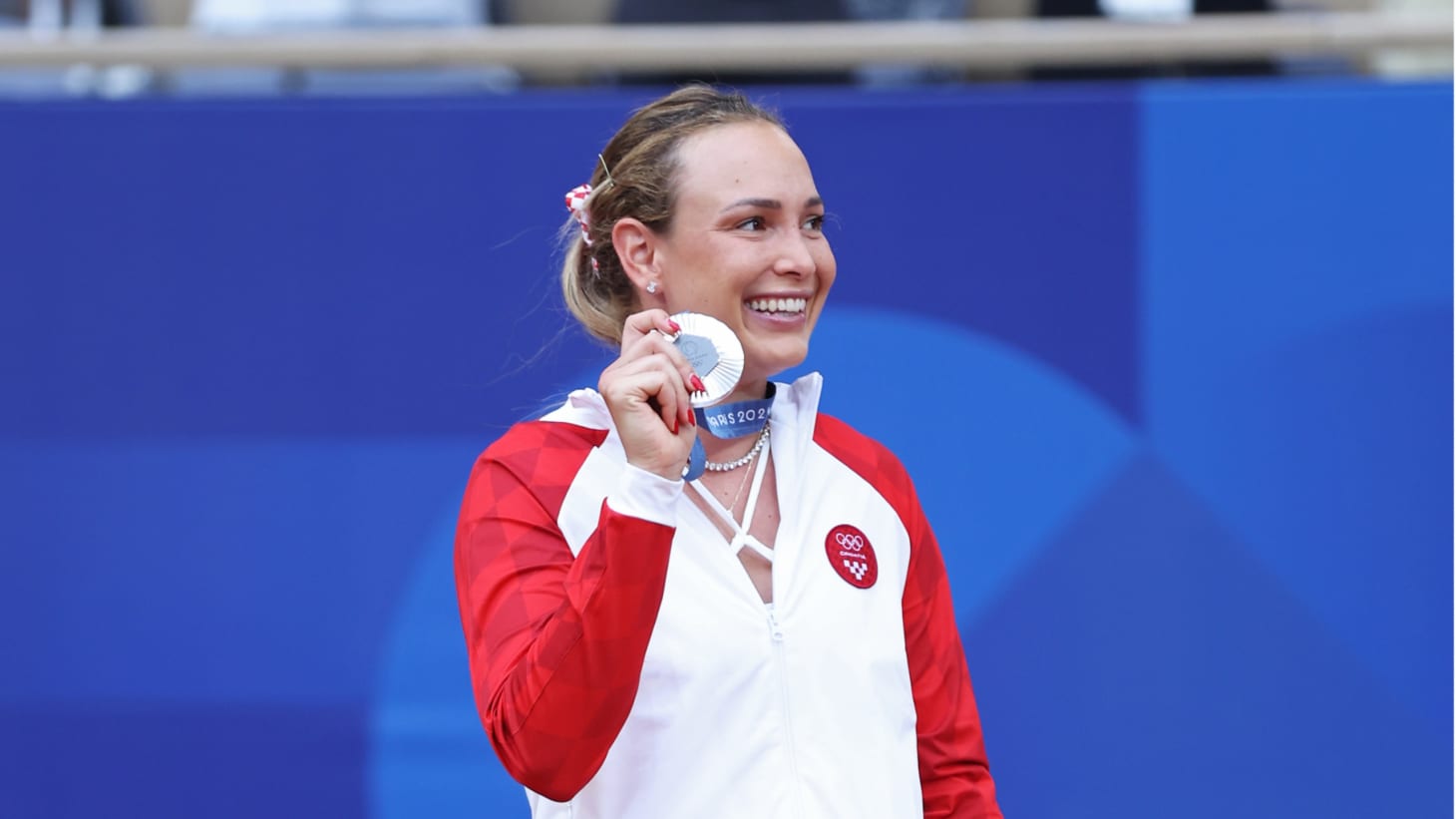
The upcoming clash between Alexandra Eala and Donna Vekić has drawn significant attention from tennis fans, particularly in the Philippines, where Eala has rapidly become a rising symbol of national pride. On paper, the matchup presents an intriguing contrast between youth and experience, momentum and fatigue, opportunity and proven pedigree.
Both players arrive in similar physical conditions in one sense, but their paths leading into this encounter tell very different stories—ones that could influence how the match unfolds on grass.
A TEST OF FORM, FATIGUE, AND MOMENTUM
At first glance, one of the few perceived advantages for Alexandra Eala lies in scheduling. Donna Vekić has endured a demanding stretch in London, playing seven matches in just eight days. Such a schedule would typically raise concerns about fatigue, recovery, and physical strain.
However, the context complicates that assumption.
Despite the heavy workload, Vekić managed to win six of those seven matches, including a notable run where she ultimately lifted the trophy at Queen’s Club after entering the main draw as a lucky loser. That unusual path to victory not only highlights her resilience but also suggests a player in strong competitive form, even under physical pressure.
Rather than showing signs of exhaustion, Vekić demonstrated consistency and mental toughness throughout the tournament, attributes that often matter more than physical freshness in elite-level tennis.
EALA’S STRONG RUN IN THE UK SWING
Alexandra Eala, meanwhile, has also enjoyed a productive stretch in the United Kingdom. Over a similar period, she won six of her seven matches across events in Birmingham and Queen’s Club.
Her standout performance came at the Birmingham 125 event, where she claimed the title after winning five matches, showcasing her growing confidence on grass courts. She also recorded a win at Queen’s Club before falling to Iva Jovic in a second-round match that ended under circumstances described as a “no-contest” scenario due to the competitive imbalance.
Like Vekić, Eala enters this matchup with momentum. However, the level of competition she faced during her run has become a central point of comparison among analysts and fans.

DIFFERENT PATHS, DIFFERENT LEVELS OF COMPETITION
One of the most discussed aspects of this matchup is the perceived difference in the quality of opponents each player has faced during their recent runs.
Donna Vekić, a seasoned tour veteran, has built her success against established, higher-ranked opponents, many of whom possess extensive grass-court experience. Her victories in London reflect not only endurance but also the ability to outperform players with more complete grass-court resumes.
In contrast, Eala’s victories, while impressive and confidence-building, have largely come against younger or less consistent opponents. In several matches, she was pushed to deciding sets, indicating that while she has been successful, the margins have often been narrow.
This difference has fueled debate among analysts about how to properly evaluate momentum between players competing in different tiers of events and against varying levels of opposition.
THE GRASS-COURT FACTOR
Grass remains one of the most unpredictable surfaces in tennis. Its speed, low bounce, and short rallies often reward experience, tactical discipline, and adaptability.
There is a growing belief that Eala has begun to embrace faster surfaces more effectively. Her recent performances suggest a player increasingly comfortable with the demands of grass and hard courts, particularly in terms of timing, movement, and aggressive shot selection.
Psychologically, this belief may be just as important as technical improvement. Confidence on grass can significantly influence decision-making, especially in tight moments where hesitation often leads to errors.
Still, translating confidence into consistent wins against elite, in-form opponents is a different challenge entirely.
THE REST ADVANTAGE: REAL OR OVERSTATED?
Another factor often highlighted in pre-match discussions is recovery time.
Eala enters the matchup with approximately one week of rest, allowing her body and mind more time to reset following a demanding schedule. Vekić, by comparison, has had only a couple of days between events, raising questions about fatigue accumulation.
In theory, this could provide Eala with an edge in freshness.
However, tennis history is filled with examples of players carrying momentum from consecutive matches, using match rhythm as an advantage rather than a burden. Vekić’s recent title run suggests she may be one of those players who thrives in continuous competition rather than prolonged breaks.
EXPERIENCE VS EMERGING CONFIDENCE
Perhaps the most defining element of this matchup is the contrast in career stages.
Donna Vekić brings years of experience on the WTA Tour, including deep runs in high-level tournaments and exposure to pressure-filled environments. Her game has been tested across surfaces, opponents, and stages, giving her a level of tactical maturity that often proves decisive in closely contested matches.
Alexandra Eala, on the other hand, represents the emerging generation—fearless, ambitious, and rapidly improving. Her recent success has fueled belief that she can compete with higher-ranked opponents and potentially disrupt established hierarchies in women’s tennis.
This dynamic creates a compelling narrative: the seasoned professional versus the rising contender seeking a breakthrough statement win.
MATCH OUTLOOK AND EXPECTATIONS
Based on recent form, both players enter the match with strong records over the past weeks, each winning six of their last seven matches in different tournaments. However, analysts often caution that raw statistics alone do not tell the full story.
Vekić’s victories against higher-ranked and more experienced opponents, combined with her proven ability to close out tough matches, give her a measurable edge in terms of competitive readiness at the highest level.
Eala’s strengths lie in momentum, adaptability, and growing confidence on faster surfaces. She may be capable of pushing the match into a tight contest, particularly if she capitalizes on any physical or mental lapses from her opponent.
Still, many observers believe that unless there is a significant shift in conditions or performance levels, experience could play the deciding role.
CONCLUSION: A MATCH THAT TESTS MORE THAN SKILL
The upcoming encounter between Alexandra Eala and Donna Vekić is more than just a meeting between two in-form players. It is a test of endurance, strategy, psychological resilience, and the fine margins that define success on grass courts.
While Eala continues to build her reputation as one of the most promising young players in the game, Vekić arrives as a proven competitor with the tools and experience to navigate high-pressure matches.
Whether this becomes a breakthrough moment for the young Filipino star or another demonstration of veteran consistency remains to be seen.
What is certain, however, is that this matchup encapsulates the unpredictable beauty of tennis—where form, fatigue, belief, and experience collide on equal footing, and where every point can reshape the narrative in an instant.