Signature: gki+mz2HCt+jfgNVlDH8wwPjqKpgse/G24KPF6TURbNCXBtTdFx7CurpwppPDE45qNTppJ1ayCPQ49P977nBttet4Kc9rCiYa86/K88SyUu1SR0J4qsGINDUR2oIBDQsFkGCtEeMioPOkyhjM6NTRnYj18BX0Henmx8C8zI62QkV0EaSUEZPAO6ODfa1MJPW075+ZXtu+I/osjRvkkHa/w==
They Shaved My Head in Front of 200 Soldiers—Then a General Saluted Me…
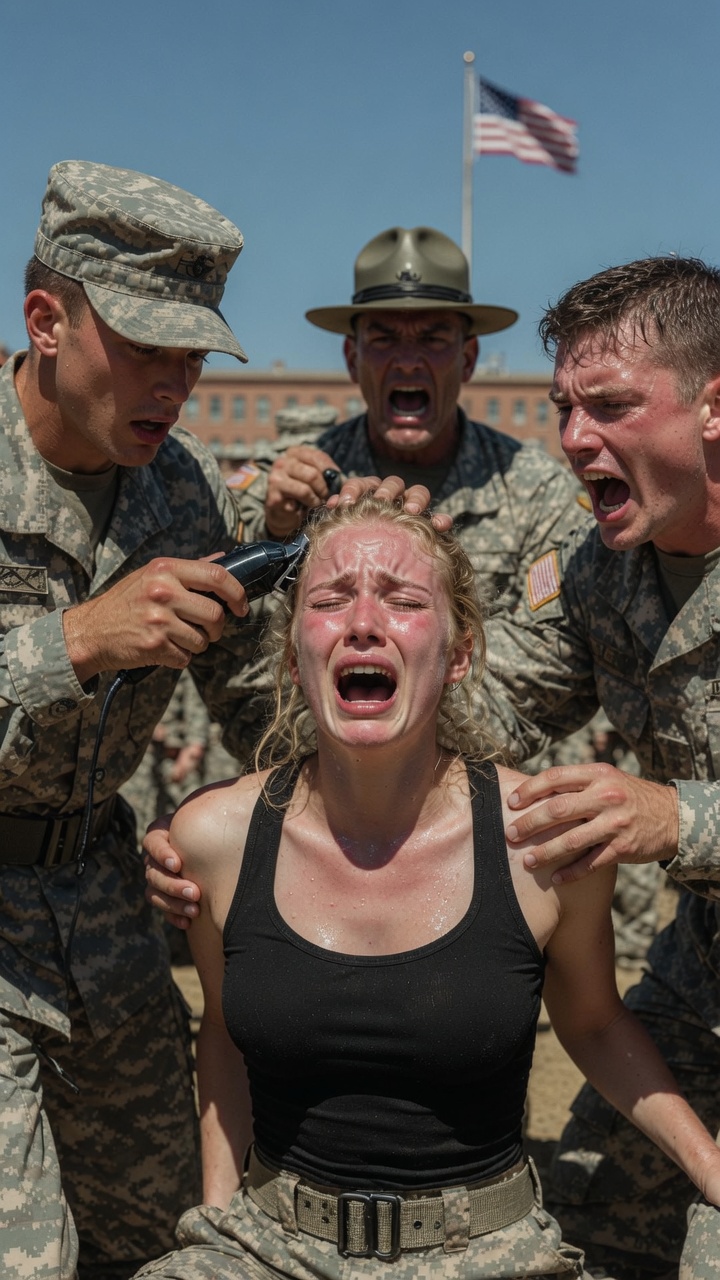
They shaved my head in front of two hundred soldiers and called it discipline.
I let them laugh.
I let them record it in their memories as the day a tired single mom finally got put in her place.
Six days later, a four-star general made them stand at attention and say my rank.
PART 1
The clippers were already buzzing when Sergeant Victor Kaine pointed at the chair and said, “Sit down, sweetheart.”
Two hundred soldiers stood in the training yard at Pine Valley Military Base, boots planted in Georgia gravel, shoulders squared, mouths half-open like they were waiting for a halftime show.
I sat.
Not because I was scared.
Because every camera in that yard was invisible, and I was the only one who knew it.
Kaine walked behind me with the clippers in his fist, enjoying himself too much. Men like him always needed an audience. Without one, they were just loud men with bad tempers and government dental.
“On this base,” he said, raising his voice, “we don’t carry dead weight.”
A few soldiers laughed.
Not all of them.
Some looked at the ground.
One young corporal in the third row—Walsh, sharp eyes, injured left knee, too smart for his own safety—watched like he was trying to solve a math problem nobody else had noticed.
Kaine leaned close to my ear.
“You still don’t want to tell me who sent you here?”
I looked straight ahead.
“No, Sergeant.”
The clippers touched my scalp.
The first strip of hair fell into the dirt.
Behind me, somebody whispered, “Damn.”
Somebody else laughed harder than he needed to.
I let them.
That was the job.
Nine days earlier, I had been sitting in General Frank Sutton’s office, drinking bad military coffee from a paper cup while he slid a file across his desk.
The file was thin.
Too thin.
That told me everything before he opened his mouth.
“Pine Valley,” Sutton said.
I raised one eyebrow.
“That bad?”
He didn’t smile.
“Worse.”
Outside his window, young soldiers moved across the parade ground under a hard morning sun. Inside, the air smelled like printer ink, old leather, and the kind of decision that ruins somebody’s week.
Sutton tapped the folder.
“Eighteen months of complaints. Harassment. Falsified performance scores. Retaliation. Personnel files altered after the fact. Parents calling congressional offices because their kids are afraid to use the chain of command.”
I opened the folder.
Two names sat on the first page.
Sergeant Victor Kaine. Major Owen Briggs.
“Cute,” I said.
Sutton gave me the look he used when he wanted me to stop being sarcastic and start being useful.
“You’d go in without rank. No ribbons. No visible record. Just an administrative transfer nobody asked for.”
“So I get treated like a problem.”
“No,” he said. “You get treated like prey.”
That part landed.
I thought about my daughter, Maya, back in Maryland with my brother. Twelve years old, sharp mouth, straight-A student, currently obsessed with Starbucks cake pops and arguing with adults like she was billing by the hour.
I thought about the last text she sent me.
Don’t forget my science fair board. Uncle James uses too much glue.
That was my life when I wasn’t doing this.
School pickups.
Target runs.
Microwaved coffee.
Credit card statements.
A daughter who knew I was a colonel but still asked why I couldn’t make mac and cheese like Panera.
Sutton watched my face.
“You can say no, Elena.”
I closed the folder.
“When do I leave?”
Three days later, I stepped off a transport bus at Pine Valley at 6:43 a.m., twenty-two minutes late because the bus driver had taken a wrong exit near Gainesville and blamed the GPS.
Sergeant Kaine stood at the gate like he’d been built out of protein powder and unresolved childhood issues.
Thick neck.
Cold eyes.
Arms crossed.
The kind of man who thought volume was leadership.
“Reese?” he barked.
For this operation, my file said Elena Reese, administrative transfer, pending evaluation.
No rank.
No deployment history.
No medals.
No authority he could respect.
“Yes, Sergeant.”
“You’re late.”
“The bus was late.”
His jaw flexed.
“I didn’t ask you why. I said you’re late.”
I paused one second.
Just one.
Enough for him to notice I wasn’t shrinking.
“Understood.”
He hated that.
I saw it immediately.
Men like Kaine wanted fear. Anger worked too. Tears were even better. Calm made them suspicious because calm meant you had options they couldn’t see.
He looked me up and down.
“You sure you’re at the right base, ma’am? HR is twelve miles east. They probably need somebody to laminate employee birthday cards.”
A few soldiers near the gate laughed.
I adjusted my duffel bag.
“This is my assignment.”
“Then fall in,” he said. “And on my base, late means you owe me.”
I walked past him.
I felt his eyes on my back.
Good.
By breakfast, Major Owen Briggs had found me.
Briggs was Kaine with a degree and a better haircut. Perfect uniform. Clean boots. Chin lifted like he was always waiting for a portrait artist.
He stopped in front of me during formation.
“How old are you, Reese?”
“Forty-four, sir.”
His mouth curled.
“Forty-four. I’ve got equipment older than you, and it works harder.”
Some soldiers smiled because survival sometimes looks like laughing at the boss’s joke.
Briggs leaned in.
“No rank. No ribbons. No visible record. You know what that makes you?”
“A transfer, sir.”
His eyes sharpened.
“It makes you a question mark.”
“Then I’ll try not to use too much punctuation, sir.”
The row went dead silent.
Briggs stared at me like I had slapped his coffee out of his hand.
Kaine, standing behind him, smiled.
Not amused.
Interested.
That afternoon, they started small.
My bunk mattress was soaked with dirty mop water.
My breakfast was cold eggs and one slice of toast while everyone else got sausage, hash browns, and coffee that at least had the courage to be hot.
My obstacle-course time was recorded two minutes slower than it actually was.
At the firing range, I grouped every shot tight enough to make the range officer blink twice.
Kaine announced my rifle had malfunctioned.
I said, “Understood.”
That night, I slept on bare springs with my jacket folded under my shoulder.
Corporal Walsh watched from across the barracks.
He didn’t know what I was.
But he knew I wasn’t what my file said.
At 11:14 p.m., while the barracks snored around me, I opened a gas-station notebook and wrote four lines.
Day One. Food restriction. Property tampering. Falsified timing. Suppressed weapons qualification score. Witnesses present.
Then I closed the notebook and slept.
Because men like Kaine always made the same mistake.
They thought silence meant weakness.
Mine meant documentation.
PART 2
By the third morning, Sergeant Kaine decided humiliation needed witnesses.
He carried a folding metal chair into the center of the yard like he was setting up for a county fair haircut booth.
Then he held up the clippers.
“Reese. Front and center.”
Two hundred soldiers turned.
I stepped out.
Walsh’s eyes followed me.
Kaine pointed to the chair.
“Sit.”
I sat.
He raised his voice.
“This is what happens when people show up with no record, no purpose, and no respect for standards.”
The clippers snapped on.
The sound cut across the yard.
A young private laughed, then stopped when nobody near him joined in.
Kaine put the clippers against my head.
My hair fell in dark strips onto my boots.
He wanted shaking hands.
He wanted begging.
He wanted one crack in my face big enough to crawl through.
Instead, I watched his reflection in the window of the admin building and memorized every word.
When he finished, the yard buzzed with whispers.
I ran one hand over my shaved scalp.
Then I looked up at him.
“Are we done here, Sergeant?”
His smile broke for half a second.
“Get back in formation.”
So I did.
And in my pocket, the notebook waited.
PART 3
The first man to realize Kaine had made a legal mistake was not an officer—it was a corporal with a bad knee and enough brains to keep his mouth shut.
Walsh fell into step beside me after formation.
“What he did,” he said quietly, eyes forward, “that’s not discipline. That’s a Code Three violation.”
I kept walking.
“Someone should know,” he added.
I turned toward Section D.
“Someone does.”
He stopped.
I didn’t.
That answer followed him around all day. I could feel it.
People underestimate silence, but they never underestimate a question they can’t answer.
Kaine escalated on day four.
He sent four men around me during the morning run—Callahan, Hutchinson, Patterson, Webster. They formed a box at mile two on the perimeter road, close enough that their shoulders cut off my breathing room.
Patterson kicked back.
His heel caught my shin.
I went down on gravel.
Not hard enough to look serious.
Hard enough to bleed.
“Careful, ma’am,” Callahan called over his shoulder. “Wouldn’t want you getting hurt.”
Kaine ran thirty yards ahead, close enough to see, far enough to deny.
I got up in under two seconds.
When we returned, he checked his stopwatch.
“Forty-nine minutes. You missed standard.”
I looked at him.
“My knee hit the ground at mile two.”
“Sounds like a personal problem.”
“Understood.”
Inside the barracks, I rolled up my pant leg. Skin torn. Blood soaking the fabric. Nothing that needed stitches.
I cleaned it with canteen water and a strip from an old undershirt.
Then I wrote.
Names.
Time.
Location.
Kaine’s position.
Angle of visibility.
The words he used afterward.
Facts don’t care if your knee hurts.
At lunch, I got cold eggs again.
No toast this time.
Nice touch.
Walsh sat across from me without asking.
“You saw Patterson trip you?” I asked.
His fork froze.
“I was going to ask you the same thing.”
“You favor your left leg when you step down stairs,” I said. “Cargo net injury last week?”
He stared.
“How did you—”
“Your boot lands wrong. You hide it badly.”
He looked down like his own knee had betrayed him.
“You notice everything?”
“No,” I said. “Only useful things.”
He leaned closer.
“What are you doing here?”
I ate the cold eggs.
“Eating terrible eggs.”
“That’s not an answer.”
“It’s the only one you can afford right now.”
He didn’t like that.
But he understood enough to stop asking.
That afternoon, Kaine made his second mistake.
He went after Private First Class Dawson Blake in the equipment yard.
Blake was twenty-one, skinny, nervous, and still had the soft face of someone whose mother probably mailed him care packages with homemade cookies and handwritten notes. He had miscounted a supply inventory because the original sheet had bad column totals.
Kaine got in his face anyway.
“Did high school teach math where you’re from, Blake, or did they just hand you a diploma for breathing?”
Blake stiffened.
Forty soldiers watched.
Kaine moved closer.
“You want to be trusted with equipment? I wouldn’t trust you with a Walmart shopping cart.”
Blake’s face went blotchy.
I waited thirty seconds.
Then I stepped forward.
“Sergeant.”
Kaine turned slowly.
“Reese, get back in line.”
“The inventory error originated on the distribution sheet. The totals were wrong before Blake counted anything.”
Kaine’s eyes narrowed.
“Back. In. Line.”
“I was at the table when the sheet was copied. The mistake is verifiable.”
The equipment yard went still.
Blake stared at me like I’d pulled him out of traffic.
Kaine’s mouth tightened.
He knew he could punish me.
He also knew forty people had just heard me say something easy to check.
“Pull the original list,” he snapped at the supply clerk.
The clerk ran.
Kaine turned on me.
“You enjoy being helpful?”
“Depends who I’m helping.”
A few soldiers looked away fast.
Kaine stepped close.
“Careful.”
“That was me being careful, Sergeant.”
He smiled, but his eyes didn’t participate.
That evening, he called me into his office.
The room smelled like stale coffee, boot polish, and a man who microwaved fish at work and blamed other people.
“Close the door,” he said.
I closed it.
He didn’t offer a chair.
I didn’t need one.
He leaned back.
“I don’t know what your angle is, Reese.”
“No angle.”
“Don’t insult me.”
“I’m trying not to.”
His jaw moved.
“You show up with a blank file. No history. No rank. No explanation. You let me shave your head in front of the whole base, and you don’t even blink. That’s not normal.”
“Normal is overrated.”
He stood.
He was big and wanted me to notice.
I noticed the cheap pen on his desk, the locked cabinet behind him, the training-budget folder half-visible under a stack of range reports, and the fact that his right hand twitched when he was angry.
“I’ve broken harder people than you,” he said.
“I’m sure that sentence sounds great in your head.”
His eyes flared.
“You think this is funny?”
“No.”
“Then what do you think?”
I met his stare.
“I think everything that happened in that yard was your choice.”
He went still.
That one landed exactly where I put it.
“You put me in the chair,” I said. “You turned on the clippers. You called the formation. You made it public. Nobody did that for you.”
He stepped back.
For the first time since I arrived, Sergeant Victor Kaine looked like a man hearing a door lock behind him.
“Get out,” he said.
I left.
In Section D, I wrote the conversation down as close to word-for-word as memory allowed.
My memory is good.
Professionally inconvenient, according to three men currently retired early and one defense contractor who no longer owns a boat.
On day five, the range officer handed me a rifle for long-distance qualification.
Two hundred meters.
Four hundred.
Six hundred.
The unit had already shot. Most missed the long target entirely.
I took the rifle.
Checked chamber.
Checked scope.
Felt the wind.
Fired.
Three at two hundred.
Three at four hundred.
Three at six hundred.
The 600-meter grouping was tight enough to make the range officer stop breathing through his mouth.
Walsh saw it.
So did Kaine.
Kaine walked to the range officer. They talked quietly.
The officer cleared his throat.
“Reese, your score won’t be recorded. Defective scope.”
Walsh’s head turned toward me.
I said, “Understood.”
Kaine looked at me.
This time, behind the anger, there was something better.
Fear.
Not fear of me exactly.
Fear of being wrong about me.
That night, Hutchinson approached me at the barracks writing table.
“I followed a bad order,” he said.
I looked up.
“About the run.”
He shifted his weight.
“What Patterson did. The box. I knew what it was.”
I waited.
He swallowed.
“I’m saying it to your face.”
“You just did.”
He stood there, expecting punishment, absolution, something.
I gave him neither.
“Don’t spend your whole career needing a stronger man to tell you what right looks like,” I said.
He looked down.
“Yes, ma’am.”
Then he caught himself.
I noticed.
So did he.
By day six, the base had changed temperature.
Not the air.
The people.
Blake started watching Kaine differently.
Walsh stopped pretending not to watch me.
Callahan, who had laughed the loudest after the run, came up to me near the gear cage.
“You’re not what we thought.”
“What did you think?”
He opened his mouth.
Closed it.
“Whatever Kaine said you were.”
“At least you’re honest.”
He looked embarrassed.
“I put you in a box.”
“Most people do.”
“That fixable?”
“Depends if you like being stupid twice.”
For half a second, he almost smiled.
Then he nodded and walked away.
That was the first real crack in Kaine’s wall.
Not my shooting.
Not the notebook.
Not the clippers.
People.
Systems only survive when everybody agrees to pretend they’re normal.
By day seven, fewer people were pretending.
And Major Briggs knew it.
PART 4
Major Briggs sent military police for me before sunrise, which meant one of two things: either he had figured me out, or he was about to make the stupidest decision of his career.
The MPs stepped out near the path between the latrine and Section D.
Not aggressive.
Not theatrical.
Professional.
“Major Briggs wants to see you, ma’am.”
Ma’am.
Not Reese.
Not transfer.
I filed that away.
The admin building was still half-dark when they took me upstairs. Briggs’s office sat behind a door with his nameplate polished clean enough to reflect insecurity.
He stood when I entered.
That was new.
Men like Briggs liked sitting behind big desks. It gave them height they hadn’t earned.
“Sit down, Reese.”
I sat.
He didn’t.
“I made calls last night,” he said.
I said nothing.
“I have friends in personnel.”
Still nothing.
His mouth tightened.
“Your name doesn’t appear in the standard database.”
I waited.
“But it appears somewhere else. Somewhere I don’t have clearance to open.”
There it was.
He walked around the desk, arms crossed.
“The person I spoke to said, and I’m quoting, ‘Reese is not your problem, Owen. Let it go.’”
I kept my breathing even.
Briggs stared at my shaved head.
“What are you doing on my base?”
“Major,” I said, “I think you already know.”
His face changed.
Not much.
Enough.
“This is an evaluation.”
I didn’t answer.
“You’ve been documenting.”
Still nothing.
His posture collapsed by a quarter inch.
That was the difference between authority and costume.
Authority holds.
Costume wrinkles.
He went behind the desk and sat.
“How bad is it?”
I studied him.
The loud version of Briggs was gone. No crowd. No formation. No polished speech about standards.
Just a middle-aged officer in an expensive watch who had finally realized corruption had a receipt.
“It’s thorough,” I said.
He closed his eyes for one second.
“The budget lines,” he said.
I looked at him.
“You know.”
“I know there are discrepancies.”
He opened a drawer and took out a key card.
Then a folder.
He placed both on the desk.
“File room. Third door left. The card opens it.”
I didn’t move.
“Why?”
He rubbed his forehead.
“For fourteen months, I signed off on Kaine’s requests because it was easier than asking why he needed the money. Training materials. Equipment maintenance. Special readiness programs. All garbage.”
His voice went flatter.
“I knew eight months ago something was wrong.”
“And now?”
He looked toward the framed photo on his shelf.
A young woman in dress uniform.
“My daughter commissioned last spring.”
That was the first honest thing he’d said since I arrived.
“I don’t want her serving in a place like this.”
I stood and took the card.
“You should’ve cared before it had your last name attached.”
He flinched.
Good.
Truth shouldn’t always arrive with a cushion.
The file room smelled like dust and toner.
I worked for forty minutes.
Training-material purchases that never hit inventory.
Maintenance contracts with vendors that had no active registration.
Two signatures approving everything.
Kaine.
Briggs.
Not sophisticated.
Men like them rarely are.
They don’t hide money like criminals in movies. They hide it like arrogant men in real life—badly, lazily, convinced nobody will ever check.
I photographed documents with a device that looked like a pen.
Nobody had searched my bag when I arrived.
Why would they?
To them, I was a tired woman with a blank file and a duffel from a discount store.
That was the beauty of being underestimated.
People left doors open.
By 0700, I had every brick.
I returned the card to Briggs’s empty office.
Then I walked back to Section D under a gray sky and sat on my bunk.
My scalp was cold.
My knee still stung.
My arm had a scrape that pulled when I bent it.
I thought about Maya.
She had called me two nights before.
“Are you eating normal food?” she asked.
“Define normal.”
“Mom.”
“I had eggs.”
“Were they from a human kitchen?”
“Technically.”
She sighed with the full disappointment of a twelve-year-old who had already discovered adults were unreliable.
“Uncle James made meatloaf again.”
“That’s a hate crime.”
“I know.”
I smiled in the dark barracks, phone pressed to my ear, listening to my daughter complain about meatloaf like the world was still ordinary.
That was why I did the work.
Not medals.
Not rank.
Not speeches.
So somebody’s daughter could walk onto a base and be trained, not targeted.
So somebody’s son could make a mistake on a supply sheet without being gutted in front of forty people.
So cowards couldn’t dress cruelty up as leadership and charge taxpayers for the costume.
At midmorning, Walsh approached me at the water station.
“Kaine’s been in with Briggs since six.”
“I know.”
“The base feels weird.”
“It should.”
He looked at me.
“What happens tomorrow?”
I drank from my canteen.
“Be in formation on time. Full dress. Don’t be anywhere unusual.”
His eyes narrowed.
“That’s not ominous at all.”
“You’ll survive.”
“That a promise?”
“No. A professional estimate.”
He almost smiled.
That afternoon, Kaine was quiet.
Not peaceful.
Quiet like a dog that had heard thunder before anyone else.
He didn’t look at me.
He didn’t speak to me.
He didn’t put Callahan or Patterson anywhere near me.
That scared people more than his yelling.
Because Kaine had trained the base to understand his moods, and this mood had no label.
At 1800, I sat on the bare springs one last time.
The soaked mattress had dried days ago, but I hadn’t put it back.
A choice.
Bare metal reminded me not to get comfortable.
I opened my notebook and reviewed nothing.
I didn’t need to.
Everything was already in order.
Unauthorized physical alteration.
Food deprivation.
Property tampering.
Falsified scores.
Coerced harassment.
Witnesses.
Budget fraud.
Chain-of-command failure.
Retaliation risk.
Remediation recommendations.
I closed the notebook.
Across the room, Blake hovered near the end of my bunk.
“You leaving soon?” he asked.
I looked up.
“Why?”
“You have that look.”
“What look?”
“My mom gets it before she cancels a subscription and calls customer service by their first name.”
That one almost got me.
“You should call your mother more.”
“I called her Sunday.”
“Call her again.”
He nodded, then hesitated.
“Are we in trouble?”
I looked at him carefully.
“Some of you are.”
He swallowed.
“Am I?”
“You made mistakes.”
His face fell.
“But you learned faster than most people do.”
He looked relieved and embarrassed at the same time.
“What about Kaine?”
I leaned back against the wall.
“Kaine is about to meet paperwork with teeth.”
Blake stared at me.
“Ma’am, that is the scariest sentence I’ve ever heard.”
“Good.”
He left.
At 0430 the next morning, I was already awake.
At 0600, I stood at the end of the fourth row in full dress.
My shaved head caught the cold air.
Kaine ran formation with short, clipped sentences.
No jokes.
No speeches.
No “dead weight.”
His face was tight enough to crack.
At 0847, an engine cut through the base.
Fast.
Too fast for routine arrival.
Every head wanted to turn.
Nobody did.
The convoy vehicle rolled through the gate at 0850 and stopped in the central yard.
The door opened.
General Arthur Whitaker stepped out.
Four stars.
No smile.
No wasted movement.
The kind of man who didn’t need to raise his voice because rank had already done the shouting before he arrived.
His aide followed with a tablet.
A senior MP stepped out behind him.
Kaine came from the equipment building trying to look calm and failing hard enough to embarrass architecture.
Briggs emerged from admin.
They saluted.
Whitaker returned it like a man signing a receipt.
“Full formation,” he said. “Central yard. Five minutes.”
By 0856, 216 personnel stood in the yard.
Boots aligned.
Breath visible.
Nobody laughing now.
Whitaker walked the rows slowly.
He passed Blake.
Callahan.
Hutchinson.
Walsh.
Then he stopped in front of me.
He looked at my shaved head.
The repaired tear in my uniform.
The scrape on my arm.
The bruise fading near my shin.
For three seconds, the yard heard nothing but wind.
Then Whitaker turned toward Kaine.
His voice dropped.
“Who authorized the physical alteration of this woman?”
Kaine opened his mouth.
“Sir, this personnel arrived as—”
“I asked who authorized it.”
Briggs looked at the ground.
Kaine’s face tightened.
“Sir, it was a discipline demonstration.”
Whitaker stared at him.
“A what?”
Nobody breathed.
Kaine swallowed.
“A discipline demonstration, sir.”
Whitaker held out his hand.
His aide placed the tablet in it.
Whitaker looked down, tapped once, then looked back up.
“Bring me this woman’s file.”
Kaine tried to recover.
“Sir, the file is limited. There’s very little—”
“I have the file,” Whitaker said.
The yard changed.
You could feel it.
“I have the complete file, Sergeant. Not the toy version you were permitted to see.”
Kaine’s color dropped.
Whitaker walked back to me.
He stopped three feet away.
Then, in front of the entire base, he said one word.
“Colonel.”
And he saluted me.
The yard froze.
Two hundred soldiers tried to understand what their eyes had already seen.
I returned the salute.
Then Whitaker turned to the formation.
“Nine days ago, Colonel Elena Reese entered this base undercover to conduct an internal evaluation of command culture, training integrity, and personnel abuse.”
He let it land.
I watched Kaine’s face.
It was the face of a man realizing the joke had been on him since the bus arrived.
Whitaker continued.
“In those nine days, she documented unauthorized humiliation, falsified evaluations, deliberate food restriction, property sabotage, coerced harassment, suppression of qualification scores, and gender-based intimidation.”
His eyes moved to Kaine.
“All of it witnessed. All of it recorded. All of it now in my possession.”
Then he said the sentence Kaine had earned.
“Sergeant Victor Kaine, you are relieved of command effective immediately.”
The senior MP stepped forward.
Kaine looked at me once.
Not angry now.
Smaller.
“Sir—”
Whitaker cut him off.
“That is not a conversation.”
And just like that, the man who had spent eleven years making people feel trapped learned what a locked door sounded like.
PART 5 — ENDING
The last thing Sergeant Kaine saw before the MP escorted him away was the woman he had shaved standing in command of his yard.
Major Briggs wasn’t spared.
Whitaker announced formal proceedings for the fourteen-month budget irregularities. Briggs’s cooperation would be noted, but not traded for innocence.
Fair.
Not soft.
The formation stayed silent.
Then Whitaker faced me.
“Colonel Reese,” he said, “the base is yours.”
I stepped forward.
Two hundred soldiers looked at my shaved head, my scraped arm, my calm hands.
“This uniform,” I said, “doesn’t make you powerful. It makes you accountable.”
Nobody moved.
“If you laughed because you were scared, learn from it. If you helped because you were ordered, own it. If you enjoyed it, pray your file is cleaner than your character.”
Walsh’s mouth twitched.
Blake stood straighter.
Kaine was gone.
His office was sealed.
His authority ended in the same yard where he thought mine had.
That night, I called Maya.
“Are you coming home?” she asked.
“I’m done,” I said. “I’m coming home.”
“Was it bad?”
I touched my shaved scalp.
“Parts of it.”
Then she said, “Uncle James made meatloaf three times.”
And for the first time in nine days, I laughed.
Because they had taken my hair.
But they never touched who I was.